Working with customs clearance providers | 0561247112

Working with a customs clearance provider starts with accurate records and clear responsibilities before dispatch. This guide focuses on your preparation, document and fee review, responses to queries and coordination between release and delivery. Contact Alrahwan Golden on 0561247112 to discuss your shipment file and service scope.
In this guideShowHide
- Who manages the file and who decides release?
- Product descriptions are the basis of review
- Checking file consistency
- Reconcile invoice, packing list and transport record
- Separate provider fees from official charges
- Queries, inspection and post-release coordination
- Start with shipment status, not a duty percentage
- Classification and valuation: why outcomes differ
- Used effects and personal relocation
- Restricted goods and approvals before dispatch
- Broker, carrier and recipient: assigning responsibilities
- Inspection, release and onward delivery
- Goods descriptions: from a trade name to reviewable details
- Invoice, packing list and purchase-order reference
- Warehouse or store delivery and proof of receipt
- Repeat supplies, samples, exhibitions and returns
- From the first message to a workable shipping plan
- Reading a quotation and understanding additions
- Read the full timeline from collection to delivery
- Shipment updates and schedule changes
- Insurance and condition records before and after transport
- Temporary storage or a changed address: plan early
- Prices and service scope
- Practical pre-dispatch checklist
- Frequently asked questions
- Can a packing list replace the invoice?
- Does every shipment need the same file?
- When should documents be reviewed?
- Should I obtain a written quote before booking?
- What if the inventory or address changes?
- How can I discuss my shipment?
- Related service guides
- Request an Alrahwan Golden quote
0561247112 · WhatsApp · Request a quote
Who manages the file and who decides release?
Identify who supplies goods data, approves invoice and inventory, communicates with the broker and answers technical queries. The provider supports preparation and follow-up within its authority; official release decisions do not become guaranteed through purchasing a clearance service. Avoid basing a deadline on an unsupported instant-release promise.
Check the provider’s eligibility and the required authorisation scope without granting more than the actual task needs. If the carrier coordinates with another party, establish the contact and process for additional-information requests. Early agreement prevents delays between sender, consignee and carrier.
Reference on commercial-document roles, not a universal destination checklist
Product descriptions are the basis of review
Provide product name, material, use, model, quantity, condition and value, with specifications where needed. Equipment or gifts alone does not describe the contents. For multipart machinery, link components to the main product and avoid inconsistent names across invoice and packing list.
Have classification and requirements reviewed using accurate technical data. Do not select a tariff code because its rate is lower or another company used it for a similar product. Record the reason for changes and check their effect on the remaining documents before final approval.
Checking file consistency
| Field | Review against | Correction trigger |
|---|---|---|
| Parties | Authorised records and recipient details | Different name or unclear party |
| Count | Inventory, packing list and packages | Product quantity confused with packages |
| Weight | Final measurements and named units | Pre-packing figure or unknown unit |
| Destination | Booking instructions and approved address | Different port, city or recipient |
| Version | Approved file and change record | Two active versions with conflicting data |
Reconcile invoice, packing list and transport record
Reconcile party names, references, goods descriptions, package counts, weights and values according to each record’s role. The invoice documents the transaction and value; the packing list maps goods to packages; the transport record describes carriage. Overlapping fields do not make these documents interchangeable.
After repacking or splitting a load, update affected records and issue a clearly dated approved version. Do not resolve a count discrepancy by changing one document while leaving conflicting data elsewhere. Have the file owner confirm consistency before dispatch or submission.
Separate provider fees from official charges
Request a breakdown of service fees, third-party expenses, official charges and applicable tax. Identify estimates, amounts supported by official records and who pays when. An including-customs label is unclear without defined scope and goods details.
Do not assume one rate for every product and destination or exemption for all used belongings. If amounts change, request the reason, reference and supporting record. Keep invoices and receipts linked to the booking so the final cost can be reconciled.
Queries, inspection and post-release coordination
When additional records or information are requested, appoint one person to review the request and send a consistent response. Clarify the deadline and whether waiting or storage may add costs, without assuming every inspection indicates a problem. The query may concern product details, value or a party to the transaction.
After release, terminal collection, distribution, consignee readiness and unloading still need coordination. Confirm the event authorising onward movement and the next delivery plan. Do not book destination labour solely on a general documents-ready message without knowing cargo status and release requirements.
Start with shipment status, not a duty percentage
Before asking “how much customs duty?”, identify whether the shipment contains used personal effects, new purchases, goods for sale or a vehicle. Establish recipient status, purpose of entry and arrival point. These details affect documentation, valuation and eligibility for special treatment. A small load or an individual sender does not determine the outcome by itself.
Blanket statements such as “fully exempt” or “one fixed charge for everything” can conceal important differences. Present a detailed inventory to a qualified broker and the competent authority, asking what can be confirmed and what needs further evidence. This guide organises the file and questions; it does not replace Customs’ decision on your shipment.

Classification and valuation: why outcomes differ
Two goods can share a commercial name yet differ in material, function or condition, so do not choose a tariff classification from an advertisement. Provide technical descriptions, photographs and manufacturer information where needed to check the appropriate classification. Valuation likewise is not a verbal figure chosen to reduce costs; it requires evidence and review under the competent authority’s rules.
Ask the estimate to state its basis, currency, date and whether other taxes or charges are included. Do not transfer an earlier shipment’s assessment to a different product or date. If a charge is unclear, request a breakdown, supporting record and qualified review rather than altering information inaccurately.
Used effects and personal relocation
Prepare an inventory distinguishing used and new items, with ownership, use and photographs supporting condition where needed. Personal relocation may have requirements different from purchased goods, but use alone is not proof of exemption. Check eligibility, supporting records and any applicable timing or other conditions with the competent authority before budgeting.
Tell the broker if some items belong to someone else or will be sold after arrival rather than automatically including them in your relocation file. Do not mix several recipients’ documents without a clear arrangement. The objective is a verifiable account of both contents and ownership, with outstanding requirements known before departure.
Restricted goods and approvals before dispatch
Food, medicines, some preparations, specialised equipment, batteries and chemicals may need a different review from ordinary furniture. Do not infer acceptance because a Saudi shop sells the product or a friend shipped something similar. Provide its name, composition or model, quantity, condition and purpose, then check requirements before adding it to the load.
Retain identifying labels, invoices and available technical records; do not transfer contents into unidentified containers to save space. If approval remains unresolved, separate the item rather than risk holding the entire shipment. Faster transport cannot replace a required permit, and a carrier’s handling acceptance is not the authority’s import approval.
Broker, carrier and recipient: assigning responsibilities
Identify the broker responsible for the file, their communication channel, authorisation scope and fees. The carrier moves cargo under its contract, the broker handles procedures within their remit, and the recipient supplies identity, business and eligibility information. Bundling services into one quote does not remove the need to know who answers each question or collects each payment.
Do not share a government-account password or verification code to “speed up clearance”. Use the appropriate official authorisation process explained by the specialist and keep the agreement. Review draft details before approval and request the transaction reference and final records afterwards. Clear responsibilities reduce delays and confusion.
Inspection, release and onward delivery
Following file review, inspection or additional information may be requested. A numbered inventory and accurate descriptions help answer questions but do not guarantee exemption from inspection. Know where the cargo is and who is following the case, and avoid fixing final unloading before the actual milestone is confirmed.
Once the necessary release is obtained, check outstanding payments or receipt documents and arrange onward delivery. Retain clearance records, receipts, transport documents and the inventory, particularly when a business needs an accounting trail. Do not discard them upon arrival; they may be needed for review, registration or subsequent discrepancies.
Goods descriptions: from a trade name to reviewable details
Begin with a detailed product list: name, function, material or composition, model, quantity, value and origin supported by available evidence. “Miscellaneous goods” or “spare parts” is insufficient when products differ materially. Supply package and product photographs and specifications where needed, particularly for equipment, devices and goods potentially requiring approvals.
Have eligibility and classification reviewed by the broker or competent authority rather than selecting a tariff code because a similar name appeared online. The actual product governs the file, not its marketing label. For multiple suppliers, keep invoices separate and link them to packages so provenance remains clear during consolidation.
Invoice, packing list and purchase-order reference
The invoice explains the transaction; the packing list explains physical distribution. Make carton counts, gross and net weights and references reconcilable across both documents and the transport record. Where one pallet contains three products, identify each quantity and location rather than providing an unverifiable total.
Include the recipient’s purchase-order reference where warehouse booking requires it and check legal name, contacts and address. A preliminary invoice is not automatically sufficient for every procedure: confirm the required version and approving party. Update documents when quantities change and maintain version control so parties do not work from outdated information.
Warehouse or store delivery and proof of receipt
Obtain receiving requirements before dispatch: hours, booking reference, accepted vehicle type, dock or forklift availability and the counting procedure. A mall store may require a service gate and a fixed window, while a warehouse may reject unbooked cargo.
Proof of delivery should record counts, condition, exceptions and the recipient, not merely show a truck outside a building. For rejected packages, record reasons and quantities and request the owner’s instructions for return or redistribution. Do not give open-ended permission to dispose of rejected goods. Clear procedures protect inventory and close the supply order consistently.
Repeat supplies, samples, exhibitions and returns
Regular supplies need agreement on reorder points, readiness and consignment size rather than inconsistent information for every trip. Track waiting, damage and measurement differences, then improve packing and scheduling from actual outcomes. A transport contract alone does not guarantee vehicle availability without booking.
Samples, returns and exhibition equipment do not always follow ordinary commercial-import procedures. Disclose the genuine purpose and any expected re-export or repair and have the broker review it before booking. Do not label merchandise as a gift or inaccurately reduce value to change treatment. Clear purpose and documents prevent avoidable rearrangement after arrival.
From the first message to a workable shipping plan
For a useful quotation, send collection city, final destination, readiness date, current photographs, item counts and packed dimensions where possible. “Some furniture” or “a small shipment” can hide important requirements: one heavy piece may require more equipment than dozens of cartons. Explain floor and lift access, distance from parking to the door and any binding property handover date.
We organise the request into data review, service definition, document and cargo-acceptance checks, then collection, loading and delivery planning. An acknowledged message or initial estimate does not reserve a vehicle or approve every product. Before agreeing, request a written summary identifying the priced load, responsibility at each stage and how changes are approved. This makes the service understandable at the start and measurable at completion.
Reading a quotation and understanding additions
Break the quote into reviewable components: collection, materials and labour, international transport, brokerage, official charges, then destination handling and distribution. Several components may form a package, but inclusion should be explicit. Check currency, applicable tax, validity and minimum charges. “All-inclusive” is not a substitute for a defined scope and exclusions.
Common disputes follow additional items after surveying, unexpected building-access difficulties or postponed receiving after dispatch. Agree a change procedure and charging basis beforehand. Request evidence for official charges and separate them from service fees. A discounted transport price neither discounts taxes nor establishes customs exemption, and it does not prove comprehensive insurance without policy terms.
Read the full timeline from collection to delivery
Separate cargo and document preparation, acceptance or consolidation, departure and international transport, then arrival procedures and distribution. Flight duration cannot be compared with complete home delivery, and vessel arrival is not an appointment for furniture assembly. Request stage start/end definitions and distinguish confirmed from estimated dates.
Timing depends on origin, destination, route and service available at booking. Changed goods readiness, missing records, inspection or an unready receiving site can affect the result. Allow a practical margin before commitments dependent on arrival and agree change notifications and decisions requiring your approval.
Shipment updates and schedule changes
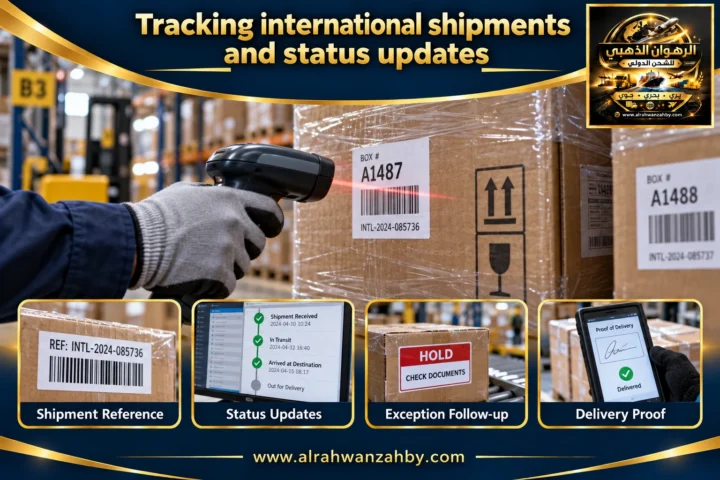
Agree a clear booking reference and a channel for collection, loading, arrival and delivery updates. “Tracking” does not necessarily mean a live GPS map; it may mean shipment-reference enquiries and operational milestone updates. What matters is the last confirmed stage, who holds the information and what is required next.
When timing changes, request the specific reason, required action and revised estimate rather than accepting “in transit” alone. A missing sender document or new receiving appointment may be the next dependency. Retain correspondence and agreements together, and advise changes to phone numbers or addresses promptly so drivers do not work from outdated details.
Insurance and condition records before and after transport
Photograph items before and after packing and record existing defects, counts and accessories. Discuss declared value and protection for valuable items before booking. Carrier liability is not necessarily a separate cargo-insurance policy, and general guarantees do not explain excesses, exclusions or compensation limits.
Ask whether loading, unloading, storage and owner-packed contents are covered and how claims must be reported. Do not sign an unqualified receipt when visible shortages or damage exist: record them and retain photographs, packaging and documents. Follow the agreed procedure and reporting period, keeping evidence until inspection requirements are clear.
Temporary storage or a changed address: plan early
If the home or warehouse is not ready, compare delayed loading, agreed storage or an acceptable alternative receiving address. Each affects handling, price and paperwork. Do not dispatch on the assumption that a driver will solve the problem on arrival, and do not treat prolonged parking inside a vehicle as suitable storage.
Define storage duration, charges, protection, access and who authorises later release. A changed city or extra delivery point is more than a contact-number correction: it may require route rearrangement and revised receiving information. Approve a written scope and keep the inventory linked to the final address.
Prices and service scope
This request needs assessment-based pricing. A generic figure with an undefined unit or different origin is not a reliable quote. Supply the following information for clear costing.
| Component | Assessment basis | Required clarification |
|---|---|---|
| Collection and transport | Cities, weight, volume and mode | Service start and endpoint |
| Preparation and handling | Goods, labour and equipment | Inclusions and additions |
| Clearance and official charges | Case, goods and records | Separate service fees and official amounts |
| Delivery and waiting | Address, appointment and access | Stops and included time |
Practical pre-dispatch checklist
| Information | What to clarify | Why it matters |
|---|---|---|
| Product | Name, description, model, material and use | Acceptance, classification and handling |
| Packages | Count, dimensions, weight and product mapping | Inventory reconciliation and space |
| Parties | Sender, recipient and file owner | Records and responses to requests |
| Value and purpose | Accurate sale, sample or personal-effects description | Appropriate case documentation |
| Destination | Address, gate, equipment and appointment | Feasible delivery |
Send the inventory and photographs first, review the written quotation and appoint collection and receiving contacts. After timing is confirmed, approve the final inventory and report content or address changes before execution. At arrival, reconcile counts and condition and keep photographs, receipt and documents for follow-up and review.
Frequently asked questions
Can a packing list replace the invoice?
They serve different roles. Where both are required, provide both with consistent relevant information.
Does every shipment need the same file?
No. Goods, purpose, destination, parties and procedure affect requirements. Start with core information, then confirm the case-specific document list.
When should documents be reviewed?
Before departure approval, updating them after final inventory and packing or any material data change.
Should I obtain a written quote before booking?
Yes. Review cargo description, inclusions, exclusions, charging unit, timing and how changes are approved.
What if the inventory or address changes?
Notify before execution and update the inventory, quote and affected records. Do not assume the change is included in the original agreement.
How can I discuss my shipment?
Call 0561247112 or use the quote form with photographs and details. Acceptance, timing and cost are confirmed after review.
Related service guides
- Preparing an international shipping enquiry
- Road, sea and air freight services
- Preparing a car for international shipping
- Tracking international shipments and status updates
- Saudi shipping to the GCC, Turkey and East Africa
Request an Alrahwan Golden quote
To arrange working with customs clearance providers, send photographs, inventory, dimensions, approximate weight, both addresses and the requested date. We will review collection, preparation and delivery scope and the information needed for a quotation. Contact 0561247112 or use the quote form.
Request an itemised quotation · Shipment updates · 0561247112
Request a quotation for your shipment
Share the collection city, destination and cargo details to discuss suitable transport and pricing.
مقالات من نفس القسم
اختيارات مرتبطة بنفس نوع الخدمة.