Preparing a car for international shipping | 0561247112
Preparing a car for international transport combines destination eligibility review, condition recording and a suitable loading method. Transport acceptance does not automatically establish import or registration eligibility. This guide organises the information and questions to review before booking with Alrahwan Golden on 0561247112.
In this guideShowHide
- Start with the purpose of moving the vehicle
- The vehicle file: information that must match
- Vehicle preparation record
- Shared carrier, dedicated flatbed or container
- Record condition before handing over the key
- Receipt, observations and coverage
- Choosing vehicle transport: shared carrier or dedicated flatbed?
- Permanent export or temporary entry: establish the purpose first
- The vehicle file: ownership, VIN and authorisation
- Pre-shipment condition check: what should you photograph?
- Restraints and protection during the journey
- Electric, hybrid and non-running vehicles
- Vehicle transit time: when does the clock start?
- Receiving the vehicle and closing the job
- Start with shipment status, not a duty percentage
- Classification and valuation: why outcomes differ
- Broker, carrier and recipient: assigning responsibilities
- Inspection, release and onward delivery
- From the first message to a workable shipping plan
- Reading a quotation and understanding additions
- Read the full timeline from collection to delivery
- Shipment updates and schedule changes
- Insurance and condition records before and after transport
- Temporary storage or a changed address: plan early
- Prices and service scope
- Practical pre-dispatch checklist
- Frequently asked questions
- Can a non-running car be shipped?
- Can belongings travel inside the car?
- Is the allowed vehicle age the same everywhere?
- Should I obtain a written quote before booking?
- What if the inventory or address changes?
- How can I discuss my shipment?
- Related service guides
- Request an Alrahwan Golden quote
0561247112 · WhatsApp · Request a quote
Start with the purpose of moving the vehicle
Specify whether the car is moving with its owner, being delivered after a sale, entering temporarily or being re-exported. The purpose affects records and receiving arrangements, so do not describe a temporary movement as permanent export or vice versa. Name the destination and party handling arrival procedures.
Before paying transport costs, have eligibility checked by the responsible authority or specialist using model year, specifications, VIN and condition. A general age limit in a marketing article is not a case decision; requirements can vary by category, purpose and recipient. Keep the review outcome with the booking file.
The vehicle file: information that must match
Check that the VIN matches ownership and transport records. Identify the owner, authorised representative and any relevant finance status. Send only requested records through the agreed channel and establish whether originals or certification are needed for the case. Know who receives an original and why.
Record powertrain, dimensions, weight, operating condition and modifications affecting height or ground clearance. These support transport selection but do not replace document review. If the vehicle or consignee changes after quotation, update the file before collection is scheduled.
Vehicle preparation record
| Item | Required information |
|---|---|
| Identity | Model, year and documented VIN |
| Condition | Running status, clearance and modifications |
| Purpose | Permanent, temporary or sale as applicable |
| Handover | Condition photos, keys and authorised sender |
| Arrival | Eligibility, receiver and unloading point |
Shared carrier, dedicated flatbed or container
Compare transport against vehicle value, ground clearance, operating condition, destination and timing. Clarify open versus enclosed and shared versus dedicated arrangements, loading method and restraints. A non-running vehicle needs different loading provisions even when its dimensions appear suitable.
For sea transport, confirm an actually available container or vehicle-shipping service and the carrier and port conditions. Ro-Ro service should not be assumed for every port or departure. Include handling, arrival expenses and release from the terminal, identifying who arranges unloading equipment where needed.
Record condition before handing over the key
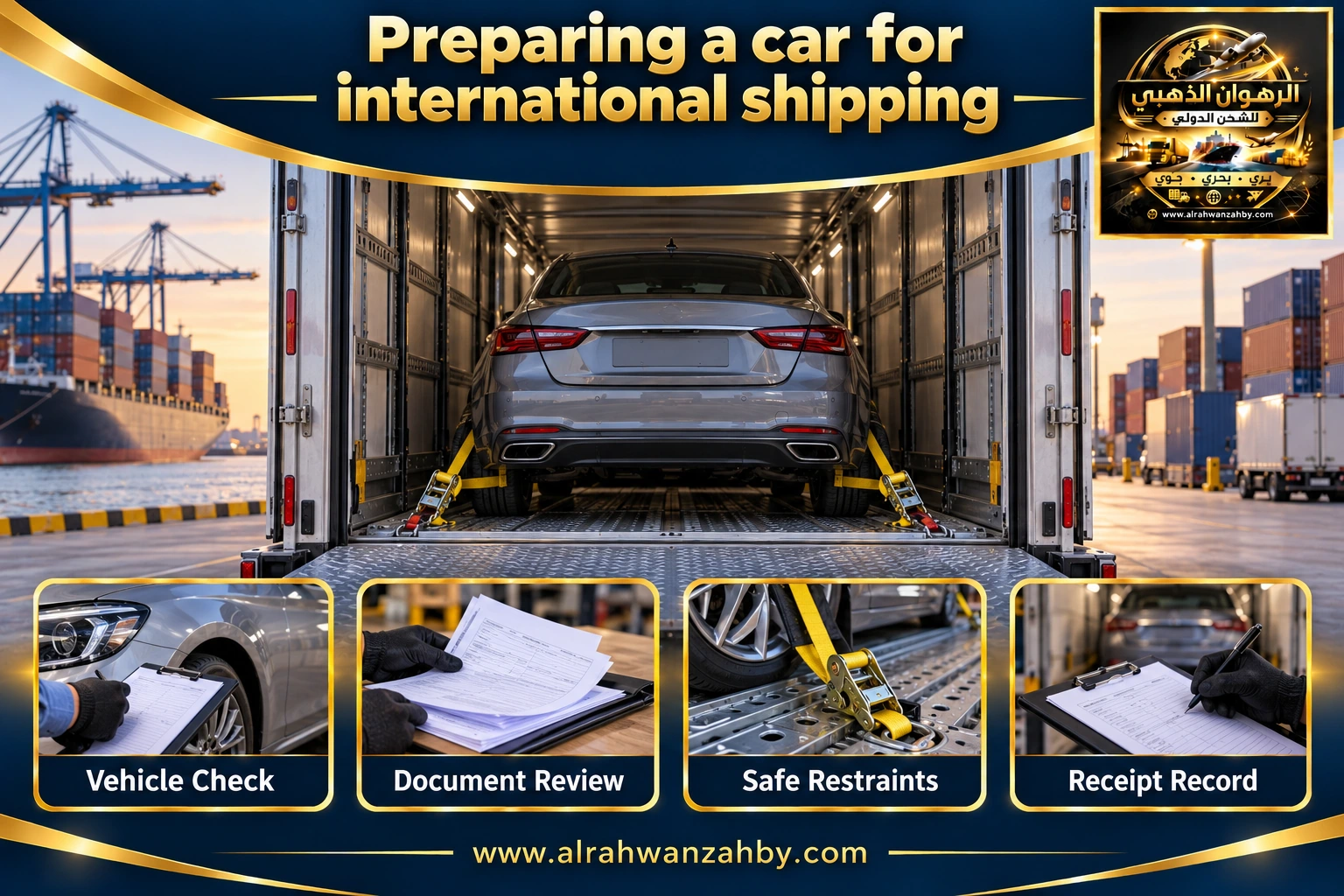
Photograph the sides, roof, windows, wheels, interior and odometer in lighting that reveals condition. Record existing marks, supplied accessories and key count, linking photographs to booking reference and date. Inspect before loading restricts visibility.
Remove unaccepted personal items and review fuel, alarm and power requirements with the carrier and manufacturer guidance. Do not disconnect a battery or make technical changes without appropriate instructions. For electric or hybrid vehicles, provide type and condition information before transport is confirmed.
IATA reference on air dangerous goods; service acceptance requires assessment
Receipt, observations and coverage
Agree who inspects the car at destination and which record confirms handover. Match VIN, keys, accessories and visible condition to the earlier photographs and record observations accurately before signing. If inspection is restricted by location or lighting, document that and arrange prompt follow-up.
If cargo insurance is requested, obtain value, limits, exclusions, reporting process and responsible party in writing. Carrier liability and cargo insurance require clear terms; a general assurance is insufficient. Keep the condition report, photographs and transport documents together.
Choosing vehicle transport: shared carrier or dedicated flatbed?
Begin with the vehicle’s dimensions, condition, value and timing. A shared transporter carries several vehicles on one journey, so collection, consolidation and delivery arrangements matter. A dedicated flatbed is worth considering when a separate arrangement or scheduling flexibility is needed. A dedicated vehicle does not remove border formalities or guarantee arrival at a fixed hour; it changes the transport arrangement, not entry requirements.
Ask how loading will actually take place. A low-clearance car needs a suitable loading angle, while a tall or modified vehicle may affect transporter selection. Enclosed transport is different from placing an exterior cover over a car and must be confirmed before pricing. Send front, rear and side photographs and disclose changes to ride height or bodywork so problems are not discovered on loading day.

Permanent export or temporary entry: establish the purpose first
Are you relocating with the car permanently, sending it for temporary use and return, or transferring a sold vehicle to a new owner? These should not be treated as identical requests. Explain the purpose, registered owner and recipient’s role before taking action involving registration or plates. Do not cancel registration or surrender plates based on a general shipping article; verify the procedure appropriate to your case with the relevant authorities.
Check destination acceptance before loading, including vehicle details, manufacturing year, condition, specifications and ownership status. Crossing the border does not automatically establish eligibility for local registration. Disclose financing or third-party ownership early so necessary approvals and authorisations can be checked. Resolving these issues first avoids paying to transport a vehicle whose eligibility remains uncertain.
The vehicle file: ownership, VIN and authorisation
Provide clear vehicle details: make, model, manufacturing year, VIN and registered owner, together with the ownership and status documents relevant to your case. Match the VIN character by character between the vehicle and its records, and avoid incomplete or outdated photographs. If the person handing over or receiving the vehicle is not its owner, ask what authorisation is accepted and what it must cover rather than assuming a telephone call is sufficient.
For a sale, keep buyer, recipient and invoice details consistent. For a personal relocation, explain residency status and the reason for entry to the responsible broker. Additional documents may be needed, so a short advertising checklist is not a guarantee that your file is complete. Keep originals secure and agree who holds each document, keys and copies.
Pre-shipment condition check: what should you photograph?
Clean the vehicle sufficiently to reveal its condition, then photograph all four sides, roof, glass, wheels, interior and odometer. Record existing scratches, dents and cracks rather than leaving them open to later disagreement. Note the number of keys and accessories handed over, loose parts and known faults. The condition report is not a formality; it is the comparison point at final delivery.
Use photographs taken at handover rather than general pictures from a sales advertisement, and disclose dashboard warnings. Tell the carrier in advance if the vehicle cannot start, move or brake. Remove personal belongings and avoid leaving cash or original documents inside. Ask about the policy on items within the car: their acceptance, declaration and insurance are not automatic.
Restraints and protection during the journey
Request loading and restraint arrangements suitable for both the vehicle and transporter, respecting designated attachment points and vehicle instructions. Straps merely looking tight in a photograph is not enough: their use must be appropriate and must not load sensitive components or rub against paintwork. A covered car still needs a condition check and correct restraint. Discuss the cover’s suitability rather than treating every wrapping method as equivalent protection.
Disclose exterior additions such as racks, spoilers and removable accessories. Ask how many loading and unloading operations are expected and whether consolidation or a transporter change is involved. Each handling stage should be clearly arranged, particularly for sports or classic cars. Do not carry out unsupported technical modifications yourself; preparation should follow manufacturer and specialist-carrier instructions.
Electric, hybrid and non-running vehicles
Disclose electric or hybrid propulsion from the outset, together with battery condition and any known related damage or recall. Acceptance and handling depend on the carrier, transport mode and vehicle condition. Do not apply a generic battery-charge percentage from an article, disconnect the battery or work on high-voltage systems yourself. Request written instructions specific to the model and journey, including how the vehicle should be moved if it requires a transport mode.
A non-running vehicle needs more detail than “it will not start”: do the wheels roll, do steering and brakes work, and are there leaks or damaged components? Photographs and answers help determine equipment, acceptance and cost. An accident-damaged vehicle or one with battery damage must not be treated as an ordinary sound car. Specialist assessment is needed before transport is confirmed, and destination acceptance may also differ.
Vehicle transit time: when does the clock start?
Distinguish collection, transporter departure, border arrival, release and final-city delivery. A shared carrier may wait for consolidation, while a dedicated flatbed cannot eliminate the time needed to resolve missing paperwork. Ask for an estimate tied to your file and clarify whether it includes local collection, final distribution, working days or calendar days.
Do not make an inflexible commitment using the shortest advertised duration without confirmation. Mention travel, a property handover or a time-sensitive sale before booking. Agree what happens if the recipient is delayed: an approved alternative delivery location, temporary storage on written terms or a rescheduled handover. A clear contingency is more useful than an unconditional promise of speed.
Receiving the vehicle and closing the job
Name the recipient, provide a working telephone number and choose a location where the transporter can stop and unload safely. Arrival in the city does not mean a large vehicle can enter every street or low-clearance car park. Agree any alternative meeting point and onward movement beforehand. Prepare the agreed evidence of entitlement to receive the car, and confirm the handover of keys and documents.
Compare condition, odometer photographs and accessories with the pre-shipment record. Record concerns before completing handover, and do not sign a damage-free statement without inspection. Receiving the vehicle from the carrier does not replace registration or road-insurance formalities needed to use it in the destination country. Keep the journey file afterwards for administrative follow-up or any later discrepancy.
Start with shipment status, not a duty percentage
Before asking “how much customs duty?”, identify whether the shipment contains used personal effects, new purchases, goods for sale or a vehicle. Establish recipient status, purpose of entry and arrival point. These details affect documentation, valuation and eligibility for special treatment. A small load or an individual sender does not determine the outcome by itself.
Blanket statements such as “fully exempt” or “one fixed charge for everything” can conceal important differences. Present a detailed inventory to a qualified broker and the competent authority, asking what can be confirmed and what needs further evidence. This guide organises the file and questions; it does not replace Customs’ decision on your shipment.
Classification and valuation: why outcomes differ
Two goods can share a commercial name yet differ in material, function or condition, so do not choose a tariff classification from an advertisement. Provide technical descriptions, photographs and manufacturer information where needed to check the appropriate classification. Valuation likewise is not a verbal figure chosen to reduce costs; it requires evidence and review under the competent authority’s rules.
Ask the estimate to state its basis, currency, date and whether other taxes or charges are included. Do not transfer an earlier shipment’s assessment to a different product or date. If a charge is unclear, request a breakdown, supporting record and qualified review rather than altering information inaccurately.
Broker, carrier and recipient: assigning responsibilities
Identify the broker responsible for the file, their communication channel, authorisation scope and fees. The carrier moves cargo under its contract, the broker handles procedures within their remit, and the recipient supplies identity, business and eligibility information. Bundling services into one quote does not remove the need to know who answers each question or collects each payment.
Do not share a government-account password or verification code to “speed up clearance”. Use the appropriate official authorisation process explained by the specialist and keep the agreement. Review draft details before approval and request the transaction reference and final records afterwards. Clear responsibilities reduce delays and confusion.
Inspection, release and onward delivery
Following file review, inspection or additional information may be requested. A numbered inventory and accurate descriptions help answer questions but do not guarantee exemption from inspection. Know where the cargo is and who is following the case, and avoid fixing final unloading before the actual milestone is confirmed.
Once the necessary release is obtained, check outstanding payments or receipt documents and arrange onward delivery. Retain clearance records, receipts, transport documents and the inventory, particularly when a business needs an accounting trail. Do not discard them upon arrival; they may be needed for review, registration or subsequent discrepancies.
From the first message to a workable shipping plan
For a useful quotation, send collection city, final destination, readiness date, current photographs, item counts and packed dimensions where possible. “Some furniture” or “a small shipment” can hide important requirements: one heavy piece may require more equipment than dozens of cartons. Explain floor and lift access, distance from parking to the door and any binding property handover date.
We organise the request into data review, service definition, document and cargo-acceptance checks, then collection, loading and delivery planning. An acknowledged message or initial estimate does not reserve a vehicle or approve every product. Before agreeing, request a written summary identifying the priced load, responsibility at each stage and how changes are approved. This makes the service understandable at the start and measurable at completion.
Reading a quotation and understanding additions
Break the quote into reviewable components: collection, materials and labour, international transport, brokerage, official charges, then destination handling and distribution. Several components may form a package, but inclusion should be explicit. Check currency, applicable tax, validity and minimum charges. “All-inclusive” is not a substitute for a defined scope and exclusions.
Common disputes follow additional items after surveying, unexpected building-access difficulties or postponed receiving after dispatch. Agree a change procedure and charging basis beforehand. Request evidence for official charges and separate them from service fees. A discounted transport price neither discounts taxes nor establishes customs exemption, and it does not prove comprehensive insurance without policy terms.
Read the full timeline from collection to delivery
Separate cargo and document preparation, acceptance or consolidation, departure and international transport, then arrival procedures and distribution. Flight duration cannot be compared with complete home delivery, and vessel arrival is not an appointment for furniture assembly. Request stage start/end definitions and distinguish confirmed from estimated dates.
Timing depends on origin, destination, route and service available at booking. Changed goods readiness, missing records, inspection or an unready receiving site can affect the result. Allow a practical margin before commitments dependent on arrival and agree change notifications and decisions requiring your approval.
Shipment updates and schedule changes
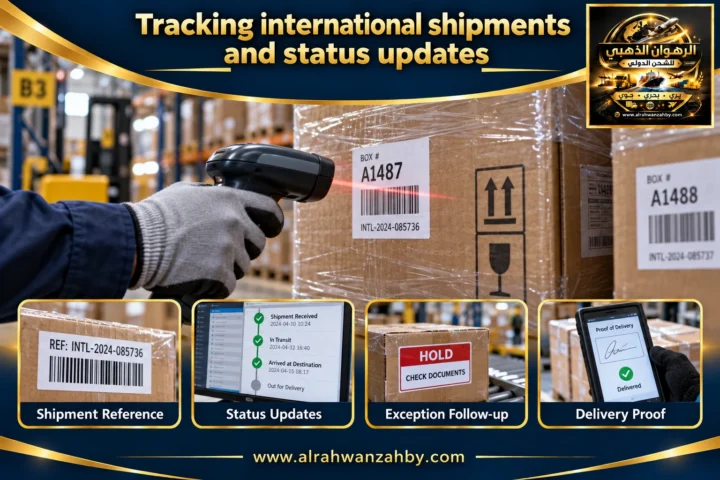
Agree a clear booking reference and a channel for collection, loading, arrival and delivery updates. “Tracking” does not necessarily mean a live GPS map; it may mean shipment-reference enquiries and operational milestone updates. What matters is the last confirmed stage, who holds the information and what is required next.
When timing changes, request the specific reason, required action and revised estimate rather than accepting “in transit” alone. A missing sender document or new receiving appointment may be the next dependency. Retain correspondence and agreements together, and advise changes to phone numbers or addresses promptly so drivers do not work from outdated details.
Insurance and condition records before and after transport
Photograph items before and after packing and record existing defects, counts and accessories. Discuss declared value and protection for valuable items before booking. Carrier liability is not necessarily a separate cargo-insurance policy, and general guarantees do not explain excesses, exclusions or compensation limits.
Ask whether loading, unloading, storage and owner-packed contents are covered and how claims must be reported. Do not sign an unqualified receipt when visible shortages or damage exist: record them and retain photographs, packaging and documents. Follow the agreed procedure and reporting period, keeping evidence until inspection requirements are clear.
Temporary storage or a changed address: plan early
If the home or warehouse is not ready, compare delayed loading, agreed storage or an acceptable alternative receiving address. Each affects handling, price and paperwork. Do not dispatch on the assumption that a driver will solve the problem on arrival, and do not treat prolonged parking inside a vehicle as suitable storage.
Define storage duration, charges, protection, access and who authorises later release. A changed city or extra delivery point is more than a contact-number correction: it may require route rearrangement and revised receiving information. Approve a written scope and keep the inventory linked to the final address.
Prices and service scope
This request needs assessment-based pricing. A generic figure with an undefined unit or different origin is not a reliable quote. Supply the following information for clear costing.
| Component | Assessment basis | Required clarification |
|---|---|---|
| Collection and transport | Cities, weight, volume and mode | Service start and endpoint |
| Preparation and handling | Goods, labour and equipment | Inclusions and additions |
| Clearance and official charges | Case, goods and records | Separate service fees and official amounts |
| Delivery and waiting | Address, appointment and access | Stops and included time |
Practical pre-dispatch checklist
| Before booking | At collection | At delivery |
|---|---|---|
| Photos, finished dimensions and weight | Check packaging and counts | Inspect and record observations |
| Describe contents and review acceptance | Approve accurate inventory | Reconcile contents during inspection |
| Address, phone and defined service | Keep booking reference | Ready recipient and clear receipt |
Send the inventory and photographs first, review the written quotation and appoint collection and receiving contacts. After timing is confirmed, approve the final inventory and report content or address changes before execution. At arrival, reconcile counts and condition and keep photographs, receipt and documents for follow-up and review.
Frequently asked questions
Can a non-running car be shipped?
Assess service acceptance and loading and unloading equipment before quoting.
Can belongings travel inside the car?
Do not add them without written acceptance, an accurate inventory and review of service and destination conditions.
Is the allowed vehicle age the same everywhere?
Do not use a universal limit. Review model year, model, purpose and current requirements for the specific destination.
Should I obtain a written quote before booking?
Yes. Review cargo description, inclusions, exclusions, charging unit, timing and how changes are approved.
What if the inventory or address changes?
Notify before execution and update the inventory, quote and affected records. Do not assume the change is included in the original agreement.
How can I discuss my shipment?
Call 0561247112 or use the quote form with photographs and details. Acceptance, timing and cost are confirmed after review.
Related service guides
- Road, sea and air freight services
- Preparing an international shipping enquiry
- Working with customs clearance providers
- Shipping from Jeddah to Jordan
Request an Alrahwan Golden quote
To arrange preparing a car for international shipping, send photographs, inventory, dimensions, approximate weight, both addresses and the requested date. We will review collection, preparation and delivery scope and the information needed for a quotation. Contact 0561247112 or use the quote form.
Request an itemised quotation · Shipment updates · 0561247112
Request a quotation for your shipment
Share the collection city, destination and cargo details to discuss suitable transport and pricing.
مقالات من نفس القسم
اختيارات مرتبطة بنفس نوع الخدمة.