Car shipping from Riyadh to the UAE 0561247112
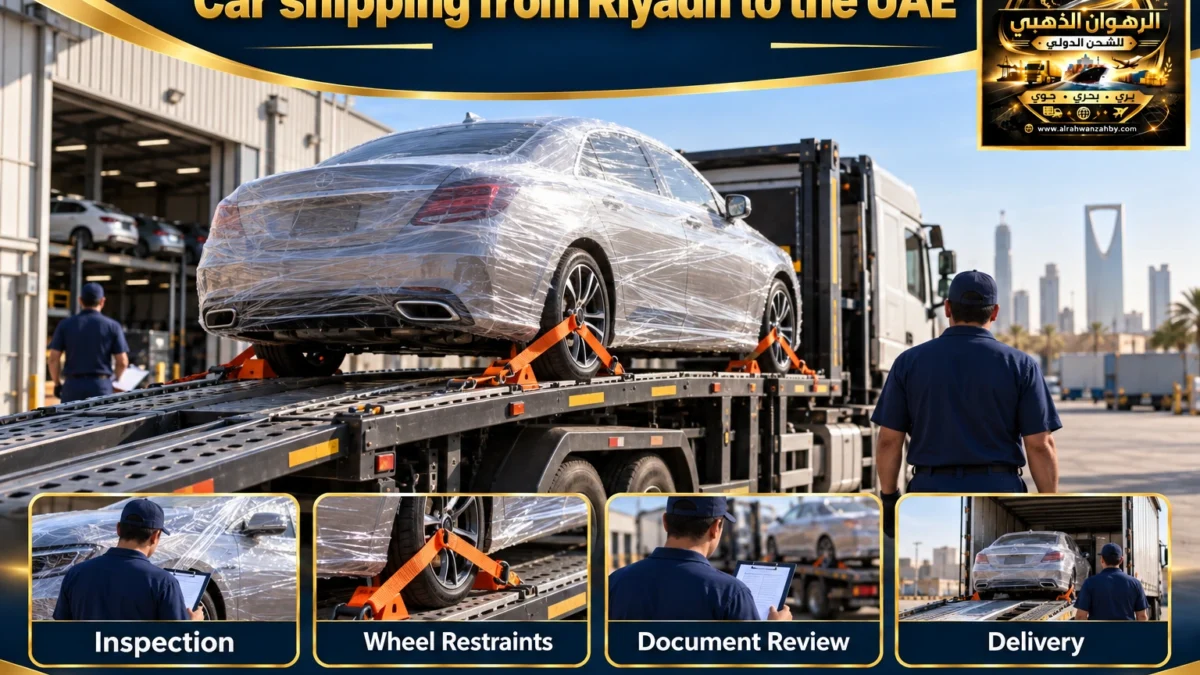
Shipping a car from Riyadh to the UAE requires a suitable Riyadh collection, transport appropriate to the vehicle, a correct entry file and a clear handover in the required emirate. The lowest price is not meaningful without knowing its collection and delivery limits. This guide covers preparation, transporter comparisons and the questions to resolve before booking.
Shipping a car from Riyadh to the UAE requires a suitable Riyadh collection, transport appropriate to the vehicle, a correct entry file and a clear handover in the required emirate. The lowest price is not meaningful without knowing its collection and delivery limits. This guide covers preparation, transporter comparisons and the questions to resolve before booking.
In this guide26ShowHide
- Delivery to a Dubai dealership or buyer: document responsibility
- The emirate and destination type affect delivery arrangements
- Choosing vehicle transport: shared carrier or dedicated flatbed?
- Permanent export or temporary entry: establish the purpose first
- How to obtain a comparable quotation
- The vehicle file: ownership, VIN and authorisation
- Pre-shipment condition check: what should you photograph?
- Restraints and protection during the journey
- Electric, hybrid and non-running vehicles
- Vehicle transit time: when does the clock start?
- Receiving the vehicle and closing the job
- Documents: make the information consistent before loading
- The final cost: what should be stated in writing?
- Insurance and transport liability are not the same
- Shipment updates: ask about the next milestone, not just location
- A final checklist before approving the booking
- Cost table and service scope
- Frequently asked questions: Car shipping from Riyadh to the UAE
- Should I choose a shared transporter or dedicated flatbed?
- Does the transport price include vehicle customs charges?
- Can a non-running car be transported?
- Can I leave belongings inside the car?
- Which inspection photographs matter?
- Does an electric vehicle need a separate review?
- What information is needed for a quote?
- Related guides
0561247112 · WhatsApp · Request a quote
This guide discusses Al Batha and Al Ghuwaifat. Confirm the actual route, cargo acceptance and procedures with the carrier and broker before departure; naming a crossing is not a live operational-status report.
Delivery to a Dubai dealership or buyer: document responsibility
For a sold vehicle, agree with seller and buyer when custody changes and who signs condition records at loading and delivery. The driver should not have to resolve a dispute over condition or accessories. Set out keys, papers and additions before departure and verify the authorised recipient at the dealership or destination.
A dealership may have a receiving appointment and designated unloading area and may not accept delivery outside that arrangement. Send access instructions and the receiving contact to the carrier early. If the buyer completes registration or another procedure afterwards, separate that from the end of transport so key handover is not mistaken for completion of every formality.
For a free-zone destination, disclose its name and entry purpose before file preparation. Do not use residential-consignee paperwork for a different commercial arrangement or transfer assumptions about fees and exemptions between cases. Qualified review determines what applies to the vehicle and transaction.
The emirate and destination type affect delivery arrangements
Specify a home in Abu Dhabi, dealership in Dubai, warehouse in Sharjah or address in Al Ain. “The UAE” alone is not a sufficient pricing destination: distribution, access and receiving appointments differ. Disclose a free-zone or commercial destination to the broker before file preparation because the transaction needs specific review.
In Riyadh, provide a suitable loading point and the car’s condition and clearance. Tight or underground parking may require moving it to another safe location. Do not assume this movement is implicitly included; agree responsibility and any cost.
Choosing vehicle transport: shared carrier or dedicated flatbed?
Begin with the vehicle’s dimensions, condition, value and timing. A shared transporter carries several vehicles on one journey, so collection, consolidation and delivery arrangements matter. A dedicated flatbed is worth considering when a separate arrangement or scheduling flexibility is needed. A dedicated vehicle does not remove border formalities or guarantee arrival at a fixed hour; it changes the transport arrangement, not entry requirements.
Ask how loading will actually take place. A low-clearance car needs a suitable loading angle, while a tall or modified vehicle may affect transporter selection. Enclosed transport is different from placing an exterior cover over a car and must be confirmed before pricing. Send front, rear and side photographs and disclose changes to ride height or bodywork so problems are not discovered on loading day.
Permanent export or temporary entry: establish the purpose first
Are you relocating with the car permanently, sending it for temporary use and return, or transferring a sold vehicle to a new owner? These should not be treated as identical requests. Explain the purpose, registered owner and recipient’s role before taking action involving registration or plates. Do not cancel registration or surrender plates based on a general shipping article; verify the procedure appropriate to your case with the relevant authorities.
Check destination acceptance before loading, including vehicle details, manufacturing year, condition, specifications and ownership status. Crossing the border does not automatically establish eligibility for local registration. Disclose financing or third-party ownership early so necessary approvals and authorisations can be checked. Resolving these issues first avoids paying to transport a vehicle whose eligibility remains uncertain.
How to obtain a comparable quotation
Start with the pickup city, final destination, recent photographs, quantity, dimensions, available weight and readiness date. Avoid descriptions such as “a few things” when the load includes large or fragile pieces. Specify any on-site work: dismantling, packing, loading, storage or unloading. These details make the quotation specific to your shipment and reveal practical requirements before a vehicle arrives.
Ask for transport charges to be separated from additional services and official charges. Confirm the currency, validity, payment arrangements and whether applicable tax is included. Compare quotations using the same collection point, delivery point, load size and protection method. A cheaper offer may cover warehouse-to-warehouse transport only, while another includes building access and handling. Keep a written copy of the agreement and subsequent changes rather than relying on a short conversation that leaves responsibilities unclear.
The vehicle file: ownership, VIN and authorisation
Provide clear vehicle details: make, model, manufacturing year, VIN and registered owner, together with the ownership and status documents relevant to your case. Match the VIN character by character between the vehicle and its records, and avoid incomplete or outdated photographs. If the person handing over or receiving the vehicle is not its owner, ask what authorisation is accepted and what it must cover rather than assuming a telephone call is sufficient.
For a sale, keep buyer, recipient and invoice details consistent. For a personal relocation, explain residency status and the reason for entry to the responsible broker. Additional documents may be needed, so a short advertising checklist is not a guarantee that your file is complete. Keep originals secure and agree who holds each document, keys and copies.
Pre-shipment condition check: what should you photograph?
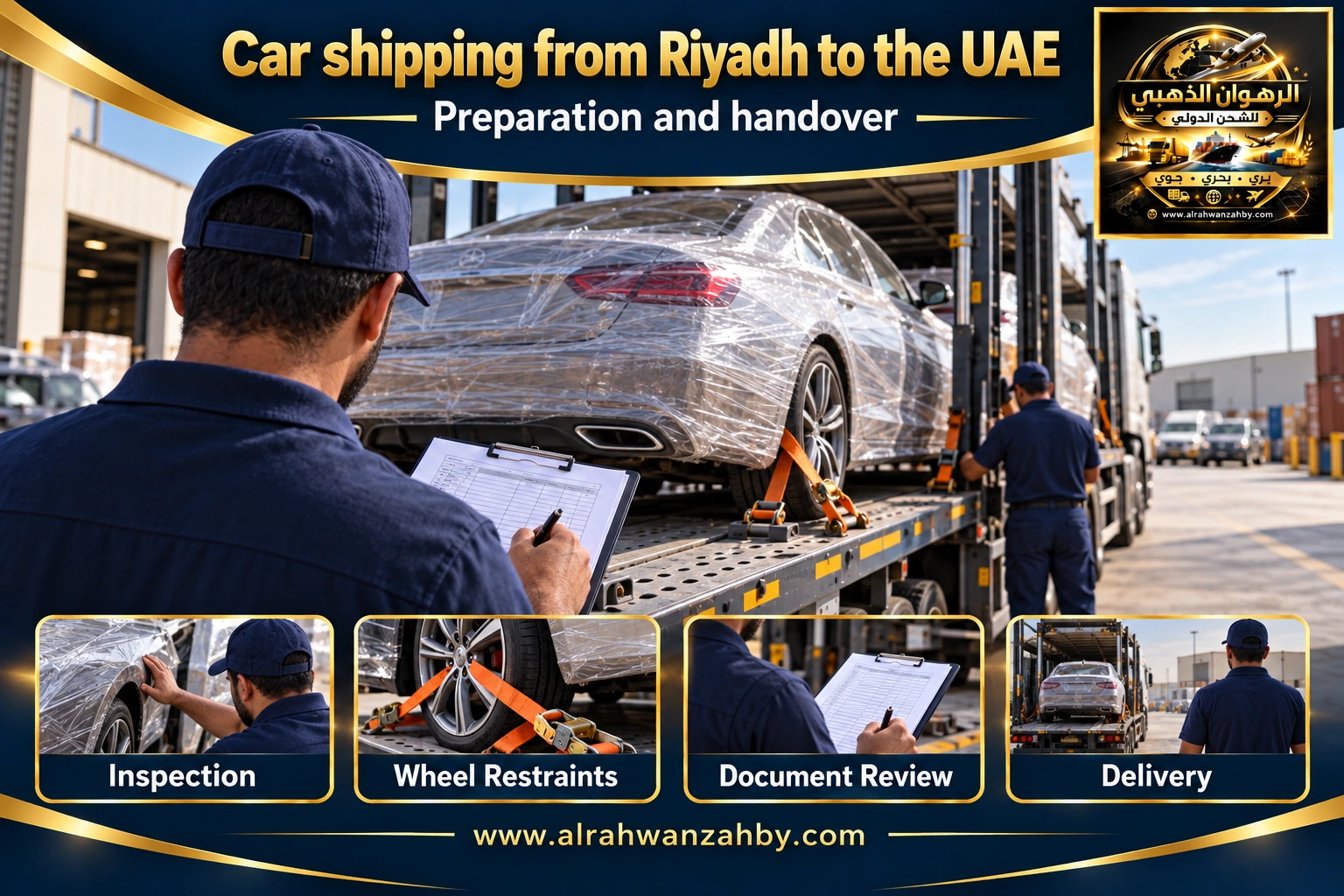
Clean the vehicle sufficiently to reveal its condition, then photograph all four sides, roof, glass, wheels, interior and odometer. Record existing scratches, dents and cracks rather than leaving them open to later disagreement. Note the number of keys and accessories handed over, loose parts and known faults. The condition report is not a formality; it is the comparison point at final delivery.
Use photographs taken at handover rather than general pictures from a sales advertisement, and disclose dashboard warnings. Tell the carrier in advance if the vehicle cannot start, move or brake. Remove personal belongings and avoid leaving cash or original documents inside. Ask about the policy on items within the car: their acceptance, declaration and insurance are not automatic.
Restraints and protection during the journey
Request loading and restraint arrangements suitable for both the vehicle and transporter, respecting designated attachment points and vehicle instructions. Straps merely looking tight in a photograph is not enough: their use must be appropriate and must not load sensitive components or rub against paintwork. A covered car still needs a condition check and correct restraint. Discuss the cover’s suitability rather than treating every wrapping method as equivalent protection.
Disclose exterior additions such as racks, spoilers and removable accessories. Ask how many loading and unloading operations are expected and whether consolidation or a transporter change is involved. Each handling stage should be clearly arranged, particularly for sports or classic cars. Do not carry out unsupported technical modifications yourself; preparation should follow manufacturer and specialist-carrier instructions.
Electric, hybrid and non-running vehicles
Disclose electric or hybrid propulsion from the outset, together with battery condition and any known related damage or recall. Acceptance and handling depend on the carrier, transport mode and vehicle condition. Do not apply a generic battery-charge percentage from an article, disconnect the battery or work on high-voltage systems yourself. Request written instructions specific to the model and journey, including how the vehicle should be moved if it requires a transport mode.
A non-running vehicle needs more detail than “it will not start”: do the wheels roll, do steering and brakes work, and are there leaks or damaged components? Photographs and answers help determine equipment, acceptance and cost. An accident-damaged vehicle or one with battery damage must not be treated as an ordinary sound car. Specialist assessment is needed before transport is confirmed, and destination acceptance may also differ.
Vehicle transit time: when does the clock start?
Distinguish collection, transporter departure, border arrival, release and final-city delivery. A shared carrier may wait for consolidation, while a dedicated flatbed cannot eliminate the time needed to resolve missing paperwork. Ask for an estimate tied to your file and clarify whether it includes local collection, final distribution, working days or calendar days.
Do not make an inflexible commitment using the shortest advertised duration without confirmation. Mention travel, a property handover or a time-sensitive sale before booking. Agree what happens if the recipient is delayed: an approved alternative delivery location, temporary storage on written terms or a rescheduled handover. A clear contingency is more useful than an unconditional promise of speed.
Receiving the vehicle and closing the job
Name the recipient, provide a working telephone number and choose a location where the transporter can stop and unload safely. Arrival in the city does not mean a large vehicle can enter every street or low-clearance car park. Agree any alternative meeting point and onward movement beforehand. Prepare the agreed evidence of entitlement to receive the car, and confirm the handover of keys and documents.
Compare condition, odometer photographs and accessories with the pre-shipment record. Record concerns before completing handover, and do not sign a damage-free statement without inspection. Receiving the vehicle from the carrier does not replace registration or road-insurance formalities needed to use it in the destination country. Keep the journey file afterwards for administrative follow-up or any later discrepancy.
Documents: make the information consistent before loading
Prepare one file containing sender and recipient details, contact information, an accurate description of the contents, their genuine value and the documents relevant to the shipment. There is no universal document list: personal movements differ from commercial imports, and vehicles differ from cartons or machinery. Confirm the final requirements with the competent authority or the broker handling your case before departure, particularly for goods requiring additional approvals.
Check names, document numbers, package counts and goods descriptions across the invoice, inventory and transport document. If the contents change, update the file before loading. Do not add a last-minute package without recording it, understate its value or change its description to obtain different treatment. Photographs support a survey but do not replace required documents. Sending a digital copy does not necessarily remove the need for an original when the relevant authority requests it.
The final cost: what should be stated in writing?
A quotation may include local collection, packing, international transport, clearance, destination handling and final delivery. These are not automatically included in every advertised price. Ask about minimum charges, any waiting charges and the circumstances in which changes to volume, address or delivery arrangements trigger a revised quotation. Separate official charges from the provider’s service fee, and establish who collects each amount and what document supports it.
Meaningful savings come from removing unnecessary services or organising the load, not from concealing contents or omitting essential protection. An accurate inventory, a coordinated collection and a ready recipient can reduce additional trips. If temporary storage is needed, confirm its duration and charging method before agreeing. A deposit does not establish that insurance or customs charges are included unless the agreement expressly says so.
Insurance and transport liability are not the same
Before booking, ask about the carrier’s liability limits, optional separate insurance, declared value, exclusions and any deductible. The phrase “your shipment is guaranteed” does not explain what happens after damage, loss or delay. Establish whether loading, unloading and temporary storage are covered, and what conditions apply to owner-packed items or high-value pieces.
Photograph the condition before handover and keep the inventory, documents and payment receipts. Inspect the shipment before signing an unqualified delivery receipt. Record any discrepancy clearly, retain packaging and photographs, and notify the responsible party using the procedure and deadline in the agreement. Full or immediate compensation should not be assumed for every situation: the records, scope of cover and cause of the incident determine the claim process.
Shipment updates: ask about the next milestone, not just location
A useful update explains completed and pending milestones: collection, preparation, loading, departure, document review, release or delivery arrangements. Ask for the agreed reference number and contact channel, and who follows the job if another handling party becomes involved. Do not assume every service provides a live map or automatic updates; the agreed reporting method should be clear and leave an accessible record.
If a delay occurs, ask for its cause, the outstanding action, the responsible party and a revised estimate once it is resolved. Missing information or an unreachable recipient may be something the customer can fix quickly. Repeating “where is the shipment?” without identifying the pending action does not shorten that process. Use the same reference when contacting support, and promptly update the recipient’s telephone number and address if they change.
A final checklist before approving the booking
Review the actual service, collection and delivery points, accepted contents, costs and exclusions, readiness date and the basis of the transit estimate. Establish who prepares and checks documents, who receives the shipment and what happens if the plan changes. Disclose relevant details early: difficult access, unusual weight, fragile items or a deadline linked to travel or a property handover.
Once approved, share the final agreement with both sender and recipient so neither expects an unrequested service. Do not send passwords or account credentials with paperwork, and share personal documents only through an agreed channel with the responsible party. To have your shipment reviewed, contact Alrahwan Golden on 0561247112 with its details and photographs rather than only a country name. This provides information that can be assessed and identifies what must be confirmed before execution.
Cost table and service scope
| Service | Indicative SAR price | Before confirmation |
|---|---|---|
| Open vehicle transport to the UAE | From 1,620 | Review vehicle, both cities, transport method and requested services |
| Enclosed transport or non-running car | Quote after assessment | Confirm availability and loading equipment |
| Official charges, insurance and registration | Separate, case-dependent | Not assumed included in transport |
Figures are indicative estimates for the described service, not a binding offer for every vehicle. Riyadh-origin prices do not automatically apply to other cities. Confirm scope, additions, official charges, insurance and applicable tax in the written quote before booking. These figures do not imply customs exemption or guaranteed transport availability.
Frequently asked questions: Car shipping from Riyadh to the UAE
Should I choose a shared transporter or dedicated flatbed?
Choose according to condition, dimensions, loading method, timing and delivery point. Compare scope and total cost, not only the vehicle type or an unexplained price.
Does the transport price include vehicle customs charges?
Do not assume duty, taxes or registration are included in transport. Request a breakdown and destination vehicle-file review before booking.
Can a non-running car be transported?
First assess rolling, steering, braking, leaks and damage. Acceptance, equipment and price depend on that assessment and suitable equipment availability.
Can I leave belongings inside the car?
Do not add undeclared belongings. Check carrier policy, documentation and cover; transporting a car does not automatically include or insure everything inside.
Which inspection photographs matter?
Photograph all sides, glass, wheels, interior and odometer. Record existing defects, keys and handed-over accessories for arrival comparison.
Does an electric vehicle need a separate review?
Yes. Disclose propulsion, battery condition and damage, and follow manufacturer and specialist-carrier instructions. Do not apply a generic charge percentage or disconnect components yourself.
What information is needed for a quote?
Pickup and delivery cities, model, year, condition, unusual dimensions, entry purpose, owner and recipient status and the required date.
Related guides
Request an itemised Alrahwan Golden quote · Shipment updates · 0561247112
Request a quotation for your shipment
Share the collection city, destination and cargo details to discuss suitable transport and pricing.
مقالات من نفس القسم
اختيارات مرتبطة بنفس نوع الخدمة.